> I keep forgetting that there is a requirement to recite the Pledge of Allegiance in US schools
There most certainly is not. The pledge is common in schools but the Supreme Court has ruled no one is required to participate and cannot be punished for non-participation. Is it still weird? Sure. But it’s not required.
"Not required" but my teachers made it abundantly clear what they thought of being forced to allow ungrateful troublemakers to disrespect their country.
I always disliked the Pledge and began to strongly dislike it after moving away from the religion it tries to establish as the national religion, but I was keenly aware that picking this fight would cost me considerable political capital and chose not to.
In the US schools I'm familiar with, it's "not required" kind of like how it's not required to attend meetings at work. Nobody's forcing you, but it will be noticed and there will be consequences.
What sort of consequences? I'm guessing the US got rid of corporal punishment, and since it's optional, could they give like detention and stuff for it? Or is this more about being bullied/similar by peers?
When I was in school decades ago, the consequences were that the teacher would single you out and scold you to “follow directions”, maybe they’d do whatever write up for not following directions. I’m sure in some places kids got detention or letters sent home to their parents, etc.
Sometimes it's not even direct consequences. You stand out as "that kid" and suddenly, you aren't given the benefit of the doubt the next time there is some kind of conflict at school. Or you are held to the rules -just a bit- more strictly than everyone else. Or, if your grade is on the border between a B+ and A-, they'll give you the B where they give the more obedient kids the A. When you become "that kid" the consequences can be almost invisible and insidious.
At least in the US, teachers and administrators are given rather broad latitude to treat students differently, without requiring justification and very often based on their own personal biases and prejudices.
The irony of (teacher) reciting a pledge in support of 'liberty and justice for all' and then falling apart because a child has tried to use some of that liberty, then wishing and perpetuating injustice upon them in retaliation, is strong.
If one's ideals fall over so easily, what would happen in the event of an actual serious attack on those ideals?
It's because it's not an ideal. North Korea does a very similar pledge thing where they call themselves the only democracy and so on. It isn't true, it's just brainwashing.
Last time I used healthcare in mainland Europe (Austria) a suspected broken finger it was 25 minutes from waking in to having the scan and the splint and being on my way. This was free with a GHic.
In the U.K. I had a problem and phoned my gp, went in 2 hours later, 10 minutes, walked out with a prescription.
In the US I had the same problem, spent 2 hours, had my blood pressure taken 4 times, and eventually had the same prescription. That’s cost me $2,000.
Now for chronic stuff perhaps it’s different. My mother told
Her gp whe hd a problem with her shoulder and Gp said she didn’t need a CT scan, so she paid $300 for one privately which was booked in for a few days later. The results said there was nothing wrong. Maybe in the US it’s different and cheaper?
This is so good and almost exactly expresses my own thoughts. There's a narrow window where it's capable and fits a need of tedious work (mostly around automating tasks it would take me a bit to remember all the arguments and commands I'd have to chain together to do it). But a lot of it is the stuff I actually WANT to be doing. And solving the hard problems makes me a better developer just as training in the gym makes your body stronger.
However, these are likely not the "hard" problems you've mentioned. I feel like I can architect solutions at a higher-level now, without having to be completely caught up in many technical nuances. I'd rather not learn the extensive PDFjs API, for example, because it would take weeks of effort to understand.
Dependency-free, performance, FORTRAN, and it would take me more than ten minutes to find and integrate a highlighter that works across all of my code bases.
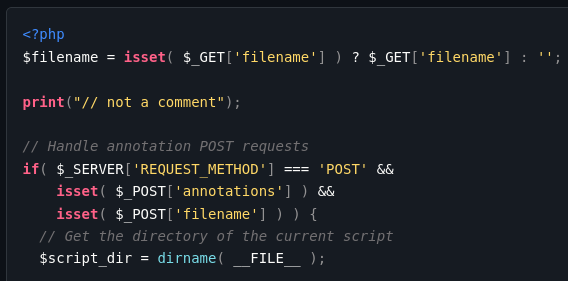
I searched for PHP-based Git libraries. All of them either invoked "git" using a system call or offered write abilities to the repo. I wanted a pure PHP solution that did not write to any files or invoke executable files (for security purposes). Maybe I didn't search long enough; at some point it becomes faster to tell the LLM what's wanted than to find a solution that fits.
Developers were not solving hard problems. The last decade was brutal—mainly frameworks, libraries, configurations, etc. The hard problems were in research.
And regarding the gym, sure, you might enjoy lifting dumbbells and solving puzzles to sharpen your brain. But that is not what engineers are hired for; they are hired to deliver a system using the best tools available. You can choose to farm by hand while the industry moves to using tractors, but sooner or later, you will be left behind.
And lastly, moving higher in abstraction allows us to tackle even more complex problems—I'd argue much more complex than the narrow puzzles we were facing before. Part of the resistance is simply an avoidance of facing higher-level complexity once the lower tier is automated.
I've been in the field for 20 years, and I do think the situation is analogous. We might not like it or we might deny it, but the fact is, LLMs do automate the mechanical part of thinking. Some people might not accept that, but that is the reality given my subjective experience and the experience of many others who are using the tool.
Indeed. But my argument is that a lot of those hard problems were, in fact, already solved; some people made a career out of solving the same problems over and over again. The fact that we have a tool to automate the lower tier of problem-solving doesn't mean we are no longer solving problems—it just means we are being asked to solve higher-order problems.
But it also means we solve the same problems as before but faster, meaning less time is given to planning and thinking about what to actually build. This is a real problem where I work. Everyones grasp of what we are building and how it is connected is markedly worse nowadays.
We as a collective must learn the skill to put these new abilities to good use instead of just aiming to accelerate as much as possible.
Indeed, I solve hard problem for a living, but those are mostly design. The actual engineering often decomposes to gluing things together with limited need for new primitives.
There are hard problems at every level of abstraction. TAGE predictor optimization up to handling data-center failover.
I don't really have a challenge for people like the OP, I get it. I too dragged my feet, even mourned the death of a type of work I had grown fond of. Then I got over it and realized I might prefer the romance of riding a horse into town, but I also like that there's semi-trucks delivering fresh produce to my grocery store year round. The leverage available right now is frankly insane. The one thing an "old dev" [as he self-labeled] can be sure of is that the younger generations will not share these hang-ups to the same degree and it's those people who will inherit the burden of maintaining and furthering the digital world.
After 20 years of coding, I do understand the grief and the sense of loss—I felt it deeply myself. But as an engineer, I was also captivated by the capabilities of the new systems. Watching these systems mechanize the thinking I had been doing for years, struggle in areas I used to struggle with, and even outperform me in some areas is nothing short of a magical experience, leaving all the anxiety about the job aside. Personally, I chose to focus on that magic, to see how far we can push these tools and discover what their limits are.
What is also interesting is that what our brains perceive to be hard is mainly because we didn't evolve to deal with these kinds of problems. But as it turns out, automating logical problems is much easier than folding clothes.
In this analogy most people are already using an excavator, however some people are using an expensive driverless excavator which sometimes digs the wrong hole, and your boss is wondering why they are paying you to prompt the excavator when they know just as well as you how to prompt the machine to dig big holes.
I think it’s both but depends on the device. For a tractor or car the author’s case is mostly correct. For a smart watch it’s more likely what you describe.


reply